
Crash game Plinko
Crash game plinko is an instant game format with short rounds and a defined result calculation flow inside the game interface. The developer and product owner, based on publicly available corporate details, is Spribe OÜ; the official Spribe web resource is typically used as a reference point for product and contact information. In practice, users do not play “on the provider’s site”, but inside an operator platform that supplies the account, cashier, and payout rules. To start, users usually need an operator account, contact confirmation, and a funding method; verification and payment availability are defined by the operator platform.

Advantages compared to other crash games
- Plinko-style interaction instead of a single multiplier line
Unlike many classic crash games that revolve around one rising multiplier and a single cashout moment, Plinko-style rounds can feel more “interface-driven”: the user sees discrete outcomes and a clear round completion point, which may reduce ambiguity about when the round ends. - Short, repeatable round cycle
The round flow is typically compact and repeatable, which can make it easier to understand the full sequence (place stake → round result → record in history) and to control session pacing compared to crash formats that encourage prolonged “waiting for the peak”. - Clearer separation between game rules and operator cashier rules
In practice, instant/crash-style games on operator platforms rely on the platform for deposits/withdrawals and verification. This format makes it easier to explain operationally: game logic is one layer, while payments/KYC are governed by the operator. That separation can reduce user confusion compared to “all-in-one” crash sections where rules, wallets, and game behavior are blended. - Straightforward audit trail for troubleshooting
Many platforms provide a round/bet history view for instant games, which supports operational checks when something looks wrong (time of round, stake, result, session info). This can be useful compared to some crash implementations where users rely mainly on live-screen behavior and have fewer structured references. - Compatibility with standard responsible-play controls at the platform level
Because access is typically through an operator account, common controls (deposit limits, time reminders, self-exclusion) apply at the same account layer used for all games. Operationally, this makes it simpler to describe and apply responsible-play settings across sessions compared to crash environments that emphasize continuous play loops without clear checkpoints.
| Parameter | Value |
| Brand | crash game plinko |
| Primary domain identifier | official Spribe domain |
| Operator | Spribe OÜ |
| Company number | 14540763 |
| Licensing authority | UK Gambling Commission |
| Licence number | 057302-R-333085-003 |
| Licence status | Suspended |
| Licence grant date | 8 Dec 2020 |
| Account verification | Typically defined by the operator platform where the game is hosted |
| Customer support | For provider-level questions: hello@spribe.co; support portal on the official Spribe web resource; partnerships: sales@spribe.co; careers: work@spribe.co. For account, KYC, deposits and withdrawals: the operator platform support |
Licensing and legal information
Who operates the service
Crash game plinko is a product by Spribe OÜ (company number 14540763). The provider’s primary domain identifier is the official Spribe domain.
It is important to separate roles:
- Spribe OÜ is the game provider and developer.
- The operator platform where users register, fund balances, and request withdrawals is a separate party. Its corporate details and licensing can differ and are defined by that platform’s terms.
Licence and status
The licence details listed in the table relate to the software provider. User-facing rules (KYC triggers, limits, withdrawals) are typically governed by the operator platform that hosts the game.
Why rules and verification matter
Cashier rules, limits, and verification processes are set on the operator side and depend on risk controls, payment methods, and compliance procedures. Even if the game is supplied by Spribe OÜ, withdrawals, fees, and document requirements are determined by the operator platform that provides access to play. For operational scenarios, the operator platform’s legal terms and cashier rules are the primary reference.

Registration and login
What you typically need to register
Registration and the user account usually belong to the operator platform hosting crash game plinko. Commonly required:
- email or phone number for contact confirmation;
- password and basic profile details;
- acceptance of the platform’s rules and data policies.
Practical points that often affect verification and withdrawals:
- profile details should be consistent, because they are commonly compared to documents during KYC;
- “one user — one account” is a typical rule on operator platforms;
- contact confirmation often must be completed before full cashier functionality or before the first withdrawal.
How to log in
Login is performed on the operator platform account: email/phone and password, sometimes with a one-time code. If the operator uses multiple interface versions, use the same version where the account was created to avoid authorization issues. Access to the game is typically available after login via the lobby and game search/categories.
How to register on an operator platform that offers crash game plinko
Step 1: Locate the registration entry point in the operator interface
Open the account creation flow within the operator platform UI where the game is available.
Step 2: Provide a contact method for confirmation
Enter an email or phone number you can confirm. Input mistakes here commonly cause missing-code issues.
Step 3: Create a password and store it securely
Set a password that matches the platform requirements. Account recovery typically depends on the confirmed contact.
Step 4: Complete the basic profile fields
Enter the details requested by the form. If name/date of birth/address are requested, use data that can match your identity documents during verification.
Step 5: Confirm the contact method
Finish confirmation via an SMS code, email link, or the platform’s mechanism. If needed, request a resend.
Step 6: Verify access to profile and security settings
After login, confirm that profile settings, security options, and the cashier section are accessible. If 2FA is available, enable it before performing payment operations.
What to do if you have login problems
Typical actions:
- Verify login and password: keyboard layout, case sensitivity, browser autofill, and saved passwords.
- If a confirmation code does not arrive: check spam/junk, confirm the email/phone is correct, retry after the standard interval; if a system error appears, capture the exact error text and time.
- If the password is rejected: use password recovery via the confirmed contact; after reset, ensure you are logging into the same platform version where the account exists.
- If you see “account locked/suspended” or access is restricted: contact the operator support with your account email/ID and a screenshot of the message.
- If login works but cashier/withdrawal is unavailable: check contact confirmation status, verification status, and account restrictions, then contact operator support.
Verification and checks
When KYC may be required
KYC is typically required by the operator platform:
- before withdrawals or for higher limits;
- after changes to payment details;
- when unusual activity is detected;
- upon request from payment providers or compliance teams.
Which documents are commonly requested
Most commonly:
- identity document (passport/ID/driver’s licence);
- proof of address (statement/utility bill/official letter);
- proof of payment method (statement, transaction proof, masked card details);
- selfie or video check, if required by the operator.
Verification timelines and statuses
Typical statuses: submitted → in review → approved / rejected / need more info.
Timelines depend on operator rules, document completeness, and processing queues. A practical flow is: submit documents → monitor status → if additional information is requested, upload updated documents in the same verification request area and re-check status.

Deposits and withdrawals
How deposits typically work
Deposits are performed on the operator platform: select method → enter amount → confirm with the payment provider → funds credited. Since crash game plinko runs inside the operator platform, deposit parameters are defined by that operator’s cashier.
How withdrawals typically work
Withdrawals are also initiated on the operator platform: select method → enter amount → confirm → internal processing → payment network/bank processing. A common rule is withdrawing back to the deposit-linked method, and KYC is often required before the first payout.
Fees, limits, and processing
Fees and limits depend on the method, verification status, and operator rules. Total time usually combines operator internal approval time plus bank/wallet/network transfer time.
| Method | Deposit: status/time | Withdrawal: status/time | Fees | Notes |
| Bank card | Usually instant after authorization | Typically 1–3 business days after approval; sometimes longer per bank | Typically depends on operator and bank; FX may apply | Exact limits/conditions and request status are shown in the cashier/account area |
| Bank transfer | Often 1–3 business days depending on bank | Often 1–5 business days depending on banking days | Typically depends on bank and operator; bank fees may apply | Cut-off time and banking days matter; see cashier/account area |
| E-wallet | Usually instant | Often faster than bank methods; may depend on direction (to wallet vs to bank) | Wallet fees and FX may apply | Confirm where funds are sent; see cashier/account area |
| Crypto | After network confirmations (minutes to hours) | Operator processing plus network confirmations (minutes to hours) | Network fee plus possible operator fee | Verify network, address, and network fee; requirements/status in cashier/account area |
| Mobile payment | Usually instant (often on card rails) | Often 1–5 business days (rail and bank dependent) | Depends on operator/bank; FX may apply | Mobile wallet may be linked to a card/bank; see cashier/account area |
| Prepaid/Voucher | Usually fast after code confirmation | Often not supported back to voucher; typically via an alternative method 1–5 business days | Depends on operator and provider | Check whether voucher payouts are supported; see cashier/account area |
| Instant banking | Usually fast, bank and scheme dependent | Often 1–4 business days, rail and banking-day dependent | Depends on operator and provider | Timelines vary by country/bank; see cashier/account area |
| Local methods | From instant to 1 business day (method dependent) | Often 1–5 business days (method and KYC dependent) | Depends on provider and FX | List and parameters vary by jurisdiction; see cashier/account area |
| Alternative wallets | Usually instant | Often fast, but depends on direction (to wallet vs to bank) | Wallet fees and FX may apply | Availability and limits may depend on account status; see cashier/account area |

Bonuses and promotions
Common types of offers
In ecosystems where crash game plinko is hosted, typical offer types include welcome offers, deposit-related promos, cashback, missions/events, tournaments, and promo codes. The exact set and eligibility depend on the operator platform and account status.
Where to check the terms
Terms are commonly shown:
- in the offer card/details panel;
- in the promotions/bonuses section;
- in the operator platform rules covering wagering and withdrawals.
When a bonus can be cancelled
Typical reasons include unmet wagering rules, multi-accounting, KYC mismatches, deposit reversals/chargebacks, limit violations, or other operator rule breaches. The grounds should be stated in the specific offer terms.
| Bonus type | Where displayed | Trigger | Key conditions | When it is voided |
| Welcome offer | Operator promotions section | Registration/first deposit | Wagering, time limits, game restrictions | Term breach, multi-accounting, KYC issues |
| Deposit bonus | Cashier/promotions | Deposit | Limits, wagering, time limit | Payment reversal, condition mismatch |
| Cashback | Profile/promotions | Activity period | Calculation rules per terms | Abuse indicators, suspicious activity |
| Missions/Tasks | Tasks section | Task activation | Completion conditions and deadline | Deadline expired, conditions not met |
| Tournaments/Leaderboards | Lobby/promotions | Event participation | Tournament rules | Disqualification under rules |
| Promo code | Cashier/profile | Code entry | Eligibility rules | Invalid code, account restrictions |

Games and sections
Lobby categories and site navigation are typically defined by the operator platform hosting crash game plinko. Spribe OÜ supplies the specific game, not the end-user cashier or the full game catalog, so sections and availability can vary across platforms and across accounts.
Game mechanics
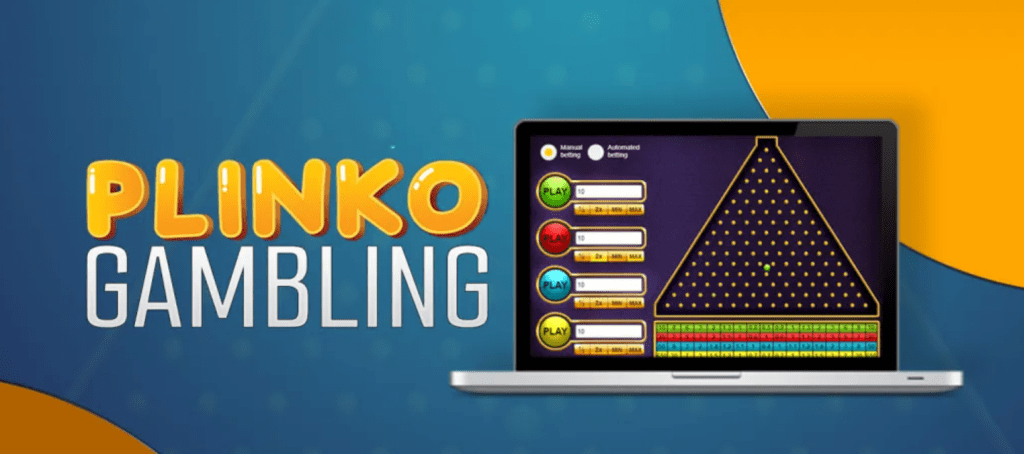
Crash game plinko is typically presented as an instant round-based game inside an operator platform lobby. The round outcome is finalized within the game interface, and the operator platform records the round in the account history.
Round objective
- Complete a single round and receive a finalized round result that is reflected in the account’s game history.
What the user typically controls
- The stake amount for the round.
- Optional round settings exposed by the interface (if available), such as selection toggles or mode options shown in the game panel.
What typically happens during a round
- Stake is placed and the round is started in the game UI.
- The game completes the round sequence and displays the finalized outcome.
- The round result is recorded in the player’s account history on the operator platform (often under bet/round history or similar).
Where to read the rules
- The primary reference is usually the game card and any “Rules/Info” section inside the operator platform interface. If a rule is not visible in the game UI, the operator’s general game rules and cashier/bonus rules may also apply.
Slots
The slots section typically contains slot games available on the operator platform. Practical navigation usually includes:
- search by game name or keyword;
- category filters (for example, popular, new, favorites, if implemented by the operator);
- opening the game card to review rules and restrictions.
What is practical to check before playing:
- stake limits and supported currency (if shown);
- whether a demo mode is offered (operator-dependent);
- whether any active bonus imposes restrictions for that specific game.
Table and card games
If the operator platform offers table and card games, they are often grouped under dedicated categories (for example, Table games or Cards). Practical checks:
- table limits and supported currency;
- timeouts and action confirmation rules in the interface;
- whether round/bet history is available inside the account.
If a section is not visible, it can be due to operator policy, account restrictions, or differences between lobby versions.
Live games
A live section may be offered by the operator platform as real-time hosted games. Operational points that typically matter:
- connection quality and browser/device stability;
- limits and access conditions may depend on account status and platform rules;
- table-specific rules and notices are typically displayed in the game card or in-game rules.
Additional categories
Operator lobbies may include additional categories such as instant games, crash games, tournaments, or events; availability is operator-defined. Practical actions:
- open the specific game card and read round rules;
- check how results are recorded, where to find bet/round history, and whether any account-level restrictions apply;
- if a game fails to start, capture time, device details, and the exact error message for operator support.
General navigation rule: the game card and any Rules/Info section inside the operator interface are typically the primary source for limits, modes, and restrictions.
Mobile access
Mobile browser
The baseline access method is commonly a mobile browser on the operator platform hosting the game. Compatibility and stability depend on the operator’s platform, browser version, and device settings.
PWA
A PWA may be offered by an operator as an “add to home screen” access method. Availability and limitations depend on the operator interface and supported browsers.
App
A dedicated mobile app or APK installation is an operator platform feature, not a feature of the game provider itself. Availability, official installation sources, and supported devices are defined by the operator; if an app is not confirmed in the operator’s official help area, the mobile browser is the safest baseline access method.

Support and issue resolution
Support channels
Support is split by responsibility:
- account, KYC, deposits, and withdrawals are handled by the operator platform support where crash game plinko is hosted;
- Game-related technical issues are typically reported to the operator first and can be escalated to the provider if needed.
Provider-level channels: hello@spribe.co; support portal on the official Spribe web resource; partnerships: sales@spribe.co.
What information to prepare before contacting support
To speed up handling, typically prepare:
- operator account ID and email;
- date/time of the issue, currency, amount;
- transaction ID/bank reference/network hash;
- screenshots and exact error text;
- device, OS, browser, and app version if applicable.
Round history and dispute checks
Where to find round history
- On the operator platform, history is commonly available in one of these areas: game history, bet history, account history, or transaction/history sections linked from the lobby or profile.
What fields are commonly shown
- Timestamp of the round.
- Game name/identifier.
- Stake amount and currency.
- Finalized result/outcome indicator.
- Round/reference ID (if the platform exposes one).
- Status markers (for example, completed/settled) if used by the operator.
How to perform a basic dispute check
- Confirm the correct account is in use (avoid confusion between multiple logins/devices).
- Re-check the timestamp window and filter by the game name.
- Compare stake amount/currency and the displayed result with your session context.
- Capture evidence: screenshots of the history entry and any on-screen message, plus device/OS/browser details.
- Contact operator support first with: account ID, time window, stake, currency, and any round/reference ID visible in history.
| Scenario | What to prepare | Where to contact |
| Confirmation code not received | email/phone, request time, spam folder check | Operator platform support |
| Password reset fails | email/account ID, error screenshot | Operator platform support |
| Deposit charged but balance not updated | amount, method, transaction ID, time | Operator platform support |
| Withdrawal pending too long | amount, method, request ID, KYC status | Operator platform support |
| Documents rejected | rejection reason, files, requirements | Operator platform support |
| Plinko round error | time of round, screenshot, bet history | Operator platform support |
| Account takeover suspicion | login times, session history, operations | Operator platform support |
| Account closure or pause | reason, balance status, active reviews | Operator platform support |
Step-by-step guides for key actions
Create an account and confirm contact
Step 1: Identify the operator platform offering crash game plinko
The game is accessed via an operator platform, so the user account is created with that operator.
Step 2: Open the operator registration flow
Start account creation in the operator interface.
Step 3: Enter registration details
Provide email/phone, set a password, and complete basic profile fields requested by the platform.
Step 4: Confirm your contact method
Confirm email or phone via code/link according to the platform instructions.
Step 5: Verify profile and cashier access
Ensure profile, security settings, cashier, and transaction history are available.
Step 6: Apply basic security settings
Enable 2FA if available and update password/contact settings as needed.
Complete verification and understand the status
Step 1: Open the verification section on the operator platform
It is typically in profile/settings or near the withdrawal flow.
Step 2: Review document requirements
Check file format, readability, validity dates, and data consistency.
Step 3: Upload an identity document
Submit passport/ID/driver’s licence as requested.
Step 4: Upload address and payment proof if required
Provide statements/bills and payment method proof if requested by the operator.
Step 5: Track the status
Monitor in review/approved/rejected/need more info and any operator comments.
Step 6: Resolve requests for additional information
Upload updated documents and re-check the status until it is finalized.
Request a withdrawal and track processing
Step 1: Check whether the account is ready for withdrawal
Confirm required profile fields and mandatory checks are completed on the operator side.
Step 2: Open Withdraw in the cashier
Navigate to the withdrawal section within the operator platform.
Step 3: Select a method and amount
Choose an available method and enter an amount within displayed limits.
Step 4: Confirm the request
Complete confirmation (code/2FA/provider confirmation) and save the request ID.
Step 5: Monitor statuses
Track processing/pending/completed in the withdrawal history.
Step 6: Escalate if delayed
If processing is unusually long, contact operator support with the request ID and transaction details.
How to play a Plinko round
- Log in to the operator platform where crash game plinko is available
Access to the game is typically provided through an operator account rather than directly by the game provider.
- Open the game from the lobby
Use the lobby category (instant/crash games if present) or the search function to find the Plinko game entry.
- Review the game Rules/Info before placing a stake
Check the in-game rules panel and any notices in the game card, especially if you have an active bonus that may restrict gameplay.
- Set the stake amount
Enter or select a stake value according to the interface controls. Ensure the displayed currency and stake format match your account settings.
- Configure optional settings shown in the game panel
If the interface provides additional options (modes/toggles), select them deliberately and keep them consistent if you plan to compare results across rounds.
- Start the round and verify the recorded result
Start the round, wait for the finalized outcome, then confirm that the round appears in bet/round history with the correct timestamp, stake, and result.
Responsible play
Control tools
Responsible play tools are typically provided by the operator platform: deposit limits, time limits, reminders, activity history, and restrictions on payment detail changes. Check account settings and any responsible play section.
Self-limits and self-exclusion
Pauses and self-exclusion are commonly implemented by the operator platform. If available, select a duration and confirm through the account interface or support.
When to seek help
If you are losing control over time or spending, use pause/self-exclusion tools and contact professional help lines available in your jurisdiction.
Crash game Plinko FAQ
Crash game plinko is an instant Plinko-style game with short rounds. The game provider is Spribe OÜ. The operator platform where you register and process payments can be a different legal entity and is defined by that platform’s terms.
Verification is commonly required by the operator platform before withdrawals or when reaching certain limits. The exact requirements depend on the operator’s rules and the payment methods used.
Bonus terms are typically shown in the offer details and in the operator promotions section. Also check wagering and withdrawal rules in the operator’s general terms.
Timing typically combines operator approval time plus bank/wallet/network processing. Actual time depends on method, KYC status, and operator rules.
Check limits, entered details, and whether the payment provider required an extra confirmation. If money was charged but the balance did not update, save the transaction ID and contact operator support.
For account, KYC, and cashout issues, contact the operator platform support. For game technical issues, report to the operator first; escalation to the provider may follow if required.
Apps and APK downloads are what the operator decides to offer. If you don’t see an app mentioned in their official help section, just use the mobile browser – it’s the safest option.
This is typically done via operator account settings or by contacting operator support. Before closing, check the remaining balance and whether any verification is still in progress.
Commonly requested documents include an identity document, proof of address, and proof of payment method. Some operators also request a selfie or video verification.
Change password, turn 2FA on if available, check login history and what’s been happening on your account. Then get in touch with operator support straight away, give them times and proof of unauthorized use.
Some operators require withdrawals to the method linked to deposits, or require extra checks when changing payment details. This is governed by the operator’s cashier rules.
Cashier, balance, withdrawals, and KYC are operator platform issues. Game launch or round display issues should be documented (time, device, screenshots) and reported to the operator, who can escalate to the provider if needed.